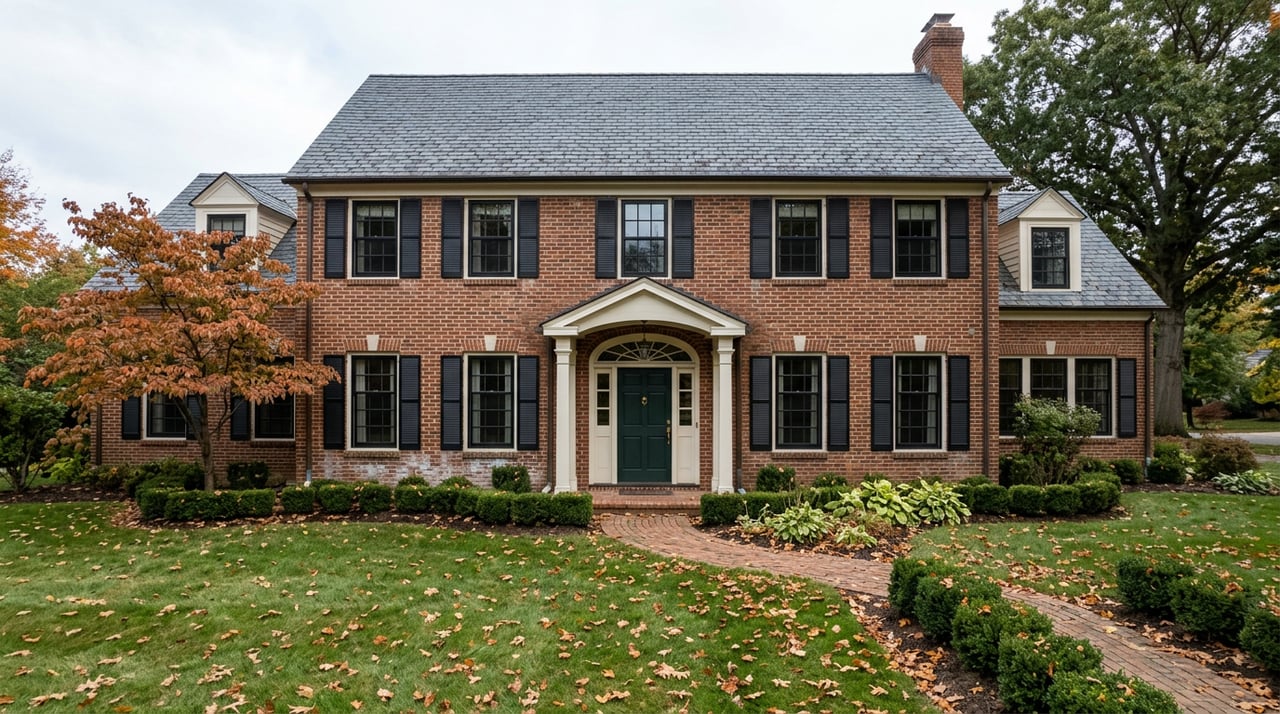
On September 2, 2025, the Edina City Council spent part of its meeting debating a front door.
The address was 4630 Edgwick Place, a home inside the Country Club Heritage Preservation District. The owners wanted a rear addition, a new garage, larger second-floor windows above that garage, a raised front stoop, and one more change that turned out to be the sticking point: replacing the original fan-light transom over the entry with an arched door. The city's Heritage Preservation Commission had already approved everything except that last piece. Commissioners ruled the transom a character-defining feature of the home's Colonial Revival design and said the arched door didn't fit. The owners appealed. Architect Angela Wingate, representing the project, told the council her team was "trying to bring back some of these original historic features, but also be practical." Preservation consultant Rachel Peterson, hired by the city, disagreed, recommending the commission's denial stand. The council closed public input on September 7 and pushed a final vote to September 16.
That single front door took two public hearings, a licensed architect, a paid preservation consultant, and a formal appeal to resolve. If you're buying, selling, or renovating in Country Club, this is the process you're actually signing up for, and it explains something in the neighborhood's sales data that doesn't add up at first glance.
What the district actually restricts
Country Club isn't a marketing name. It's a Heritage Landmark District covering roughly 555 homes, about 90 percent of them built between 1924 and 1944 under the original design controls laid down by developer Samuel Thorpe. Because the district carries local historic designation, any exterior change visible from the street, including garage doors, requires a Certificate of Appropriateness from the city before a permit gets issued. Homes can't be torn down unless they're structurally substandard. This isn't a suggestion or a homeowners' association preference. It's Edina city code, and it applies whether the home has been in one family for 47 years or just changed hands last month.
The Edgwick Place case shows how granular that review gets. The commission wasn't debating whether an addition could happen. It approved the addition, the garage, and the larger windows. It drew the line at one architectural detail on the front elevation, because the plan of treatment for the district asks reviewers to weigh individual character-defining features against the Secretary of the Interior's standards for rehabilitation, not just against the project as a whole.
The rule got sharper on January 1, 2026
The city spent more than two years updating the Heritage Preservation Ordinance and the Country Club Plan of Treatment before the council approved the changes, with the update taking effect January 1, 2026. Assistant City Planner Emily Dalrymple, who staffs the Heritage Preservation Commission, told the council the old ordinance didn't clearly spell out when a Certificate of Appropriateness was required, and the rewrite was meant to close that ambiguity. The update also adds an escrow fee for Heritage Landmark properties and for homes inside the Country Club District, a response to residents who'd watched neighbors start exterior demolition and then leave a property exposed to the weather for multiple winters while work stalled.
That detail matters if you're under contract right now. A fee tied to landmark status is not something a standard home inspection or a title search will surface for an out-of-area buyer. It shows up when you apply for your first COA, and by then you've already closed.
What the market data is actually telling you
Here's where the numbers get interesting. Over the three months ending July 2026, Country Club homes sold at a median price of $1.8 million, up 17.6 percent from the same period a year earlier, with an average time on market of just 9 days. Pulled a different way, the trailing 12-month figure through mid-2025 showed homes taking a median of 57 days to sell.
Both numbers are real. They're just describing two different neighborhoods that happen to share a zip code.
The 9-day figure is the market for homes that are already done: recently renovated kitchens, updated systems, nothing left for a buyer to negotiate with the Heritage Preservation Commission over. Those homes get multiple offers fast because the buyer isn't inheriting a permitting question along with the mortgage. The 57-day figure is the other market: homes with real character but real deferred work, where a buyer has to price in months of COA review before they can touch the façade they're planning to change. A buyer who wants to widen a garage door, swap a transom, or raise a stoop isn't just buying a house. They're buying a process, and that process has its own timeline, its own consultants, and now its own fee.
That split is the real story behind the district's price growth. It isn't that every Country Club home is appreciating at the same rate. It's that move-in-ready homes are getting bid up because buyers are actively avoiding the slower category, and the slower category is where a knowledgeable agent and a clear-eyed contractor conversation earn their keep before you write an offer, not after.
What tends to clear review, and what doesn't
Based on how the Heritage Preservation Commission has ruled on cases like Edgwick Place, a few patterns hold:
- Rear additions and garage expansions that don't change what's visible from the street tend to move through more easily, especially when they're paired with a setback variance from the planning commission.
- Changes to street-facing elements, entry doors, transoms, window proportions, roofline, get the closest scrutiny, because those are the features the plan of treatment identifies as defining the district's Colonial, Tudor, and Georgian Revival character.
- Full teardowns are effectively off the table unless a structural engineer can document the home is substandard. This is one reason longtime residents describe Country Club as having far fewer teardowns than the rest of Edina.
- Projects that stall midstream, particularly ones where a façade sits partially demolished over a winter, are exactly what the new escrow fee is designed to prevent, and they're the fastest way to end up in front of the full city council rather than just the commission.
None of this means Country Club is a difficult place to own a home. It means the renovation conversation needs to happen before you're under contract, not after your contractor pulls a permit.
What this means if you're buying or selling here
If you're selling a Country Club home with unfinished exterior work or a renovation you were planning but never started, your listing description should be honest about what's approved and what isn't. Buyers who've done their homework will ask, and a clean paper trail with the Heritage Preservation Commission is worth more to them than a lower asking price.
If you're buying, get a sense of what you actually want to change on the exterior before you make an offer, and ask whether it touches anything visible from the street. A conversation with city planning staff, even an informal one, can tell you in a week what an appeal hearing takes two.
This is the kind of due diligence where legal training and hands-on construction experience actually change the outcome of a transaction, not just the closing paperwork. Understanding a plan of treatment, reading a certificate of appropriateness application the way an architect reads it, and knowing which features a commission will fight for versus which ones it will let go, that's the difference between a smooth 9-day sale and a project that sits for two months while a buyer gets cold feet about a front door they haven't even redesigned yet.
A few common questions
Can a home in Country Club be torn down? Only if it's documented as structurally substandard. Short of that, the district's plan of treatment prohibits demolition of contributing homes, which is most of the neighborhood's housing stock.
Does the Certificate of Appropriateness process apply to garages? Yes. Garages count as part of the street-facing façade under the district's rules, which is part of why the Edgwick Place project needed separate review for its garage addition.
How long should I budget for a COA review? A straightforward request that doesn't touch a character-defining feature can move through commission review in a single meeting cycle. A contested change, like the one at Edgwick Place, can take a full hearing plus a council appeal, spanning several weeks to a couple of months from application to final decision.
If you're weighing a purchase in Country Club, or you already own here and are trying to figure out what a renovation will actually cost you in time as well as money, Josh Sprague has spent two decades in Edina navigating exactly this kind of process. Reach out to talk through your specific address and your specific plans before you write an offer or a permit application.
